


Ron Homer is determined to make the most of his Commonwealth Games debut after the sport of bowls saved his life.
The 73-year-old will represent Team England in para bowls this summer and has set himself the goal of leaving Glasgow with a gold medal around his neck.
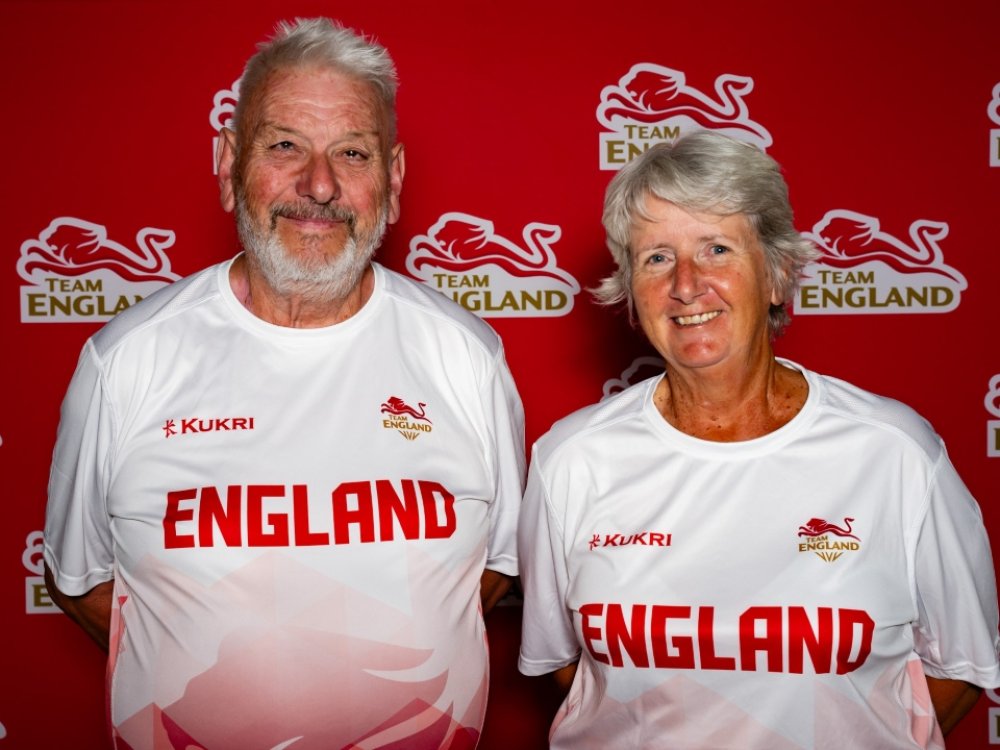
Competing in the pairs alongside Sally-Ann Lewis-Wall, the man from Yeovil doesn’t believe in competing just to make up the numbers.
“You’ve got to aim for the top,” he said. “There’s no point going there thinking you’re not going to do anything. Gold would be superb. The Games will be daunting at first. You’ve seen it on TV over the years. The opening ceremony, playing other countries, it’s going to be some event. But I’m up for it.”
Homer’s journey to the Games is remarkable, having only discovered bowls after suddenly losing his sight in his mid-40s. Prior to his loss of vision, he worked in the motor trade and later ran his own window and carpet-cleaning businesses, both of which relied heavily on driving.
But when that independence disappeared, life became a struggle.
“I lost my sight virtually overnight,” Homer explained. “I had detached retinas and about seven operations in 18 months. You lose your job, you can’t drive, and your whole world collapses. “Everything came to a big black hole. It was a very dark place for a while.”
However, the turning point came when a social worker suggested Homer try his hand at down at Yeovil Bowls Club, which had a section for visually impaired players.
“I knew absolutely nothing about bowls,” he continued. “But I plucked up the courage, went along and basically caught the bug. Now here we are 30 years later. Bowls was a life changer, really. A life saver.”
Since then, Homer’s career has flourished, reaching such pinnacles as winning gold in the B2 section with Keith Cook at the 2015 International Blind Bowls Association World Championships in New Zealand, as well as claiming world bronzes in 2017 and 2023.
Such is the nature of para bowls, Homer has been able to play with able-bodied players and believes the sport’s inclusivity sets it apart.
“You don’t need adaptations,” he continued. “You just need someone to tell you where your bowls finish. Compared to other sports, it’s unique.”
Away from competition, Homer has also given decades of service to the sport. He spent more than 20 years as treasurer of Yeovil Visually Impaired Bowls Club and remains on the committee. In recognition of that commitment, he was awarded a British Empire Medal (BEM) in the 2026 New Year Honours list.
“It came completely out of the blue, when I saw the letter, I was completely taken aback,” he added. “I had to read it about 10 times before it sunk in, but I couldn’t tell anybody, which was the hard part. Bowls showed me there is life after trauma. I would urge anyone of any age or ability to give it a go.”
Phil Campbell/Sportsbeat 2026


